
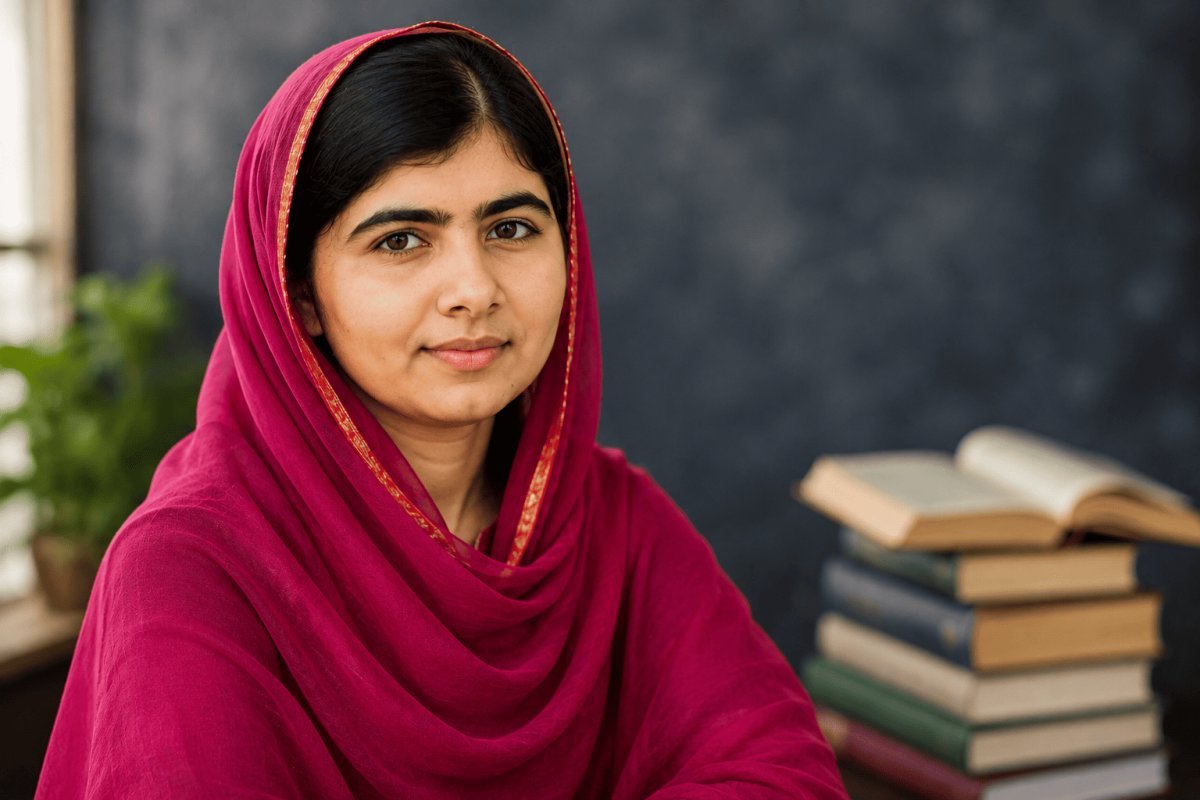
Malala Yousafzai is a Pakistani education activist who became known around the world for standing up for girls' right to education. Her story began in the Swat Valley, where she was an ordinary schoolgirl who loved learning. Over the years, her courage turned her into an international voice for children who face barriers to education.
Her journey has not always been easy. Malala faced threats and a serious attack because of her activism, but she refused to let fear decide her future. Today, she continues to support education for girls through her advocacy and the Malala Fund.
Early Life of Malala Yousafzai
Malala Yousafzai was born on July 12, 1997, in Mingora, a city in Pakistan's Swat Valley. Her father, Ziauddin Yousafzai, was a teacher and ran a school. He encouraged Malala to study, ask questions, and express her opinions.
Education was therefore an important part of Malala's childhood. She enjoyed going to school and dreamed of building a successful future through learning.
However, the situation in Swat changed as restrictions on girls became more severe. Many girls were prevented from attending school, and families faced growing pressure over whether their daughters could continue their education.
These experiences had a deep effect on Malala.
Malala's Voice for Girls' Education
While still a young student, Malala began speaking about the importance of education. In 2009, she shared her experiences of life in Swat through a BBC Urdu diary using a pseudonym.
Her writing described what it was like for a schoolgirl living in a region where girls' education was under threat. Her words attracted attention because they came directly from someone experiencing the situation.
Malala did not ask for special treatment. She wanted something much simpler: the opportunity for girls to go to school and learn.
Her message gradually reached people outside Pakistan, and she began receiving recognition for her courage.
The Attack That Changed Her Life
On October 9, 2012, Malala was attacked while traveling home from school. She was seriously injured and later received medical treatment in the United Kingdom.
The attack became international news and sparked widespread condemnation. Many people feared for Malala's life and wondered whether she would ever be able to return to her normal life.
After recovering, however, she chose to continue her campaign.
Instead of allowing the attack to silence her, Malala used the experience to strengthen her message about education. Her voice became even more widely known, and she began speaking to audiences around the world.
Malala's United Nations Speech
One of the most important moments in Malala's journey came on July 12, 2013, when she addressed the United Nations in New York.
Speaking on her 16th birthday, she talked about education, peace, and the rights of children. Her appearance showed how far her story had traveled in less than a year after the attack.
The day became known as Malala Day, highlighting the importance of her campaign for education.
For Malala, education was not simply about school buildings and textbooks. She saw learning as a way for children to gain confidence, understand the world, and create opportunities for themselves.
The Malala Fund
Malala and her father established the Malala Fund, an organization focused on helping girls access quality education.
The organization works with education advocates and communities in different parts of the world. Its goal is to help girls receive the education they need to build independent and successful futures.
The Malala Fund has also advocated for greater investment in girls' secondary education and policies that can remove barriers preventing girls from staying in school.
This work allowed Malala's message to grow beyond her personal story and become part of a wider global movement.
Malala Yousafzai and the Nobel Peace Prize
In 2014, Malala Yousafzai received the Nobel Peace Prize jointly with Indian children's rights advocate Kailash Satyarthi.
At only 17 years old, she became the youngest Nobel Peace Prize laureate. The award recognized their efforts to promote children's rights and access to education.
For Malala, the Nobel Prize was not the end of her journey. Instead, it gave her an even larger platform to continue discussing education and the challenges faced by girls around the world.
Malala's Education and University Life
Although Malala became internationally famous as a teenager, she continued to take her own education seriously.
She attended Edgbaston High School for Girls in Birmingham, England. Later, she studied Philosophy, Politics and Economics at the University of Oxford.
Malala graduated from Oxford in 2020.
Her decision to continue studying is an important part of her story. Education was not simply the subject of her speeches; it remained an important part of her own life.
Major Achievements of Malala Yousafzai
Over the years, Malala has achieved several important milestones. Some of her major achievements include:
- Becoming a leading international advocate for girls' education
- Addressing the United Nations
- Co-founding the Malala Fund
- Receiving the Nobel Peace Prize in 2014
- Becoming the youngest Nobel Peace Prize laureate
- Graduating from the University of Oxford
- Inspiring young people to speak about education and equality
Her achievements are especially remarkable because she began her activism while she was still a child.
Why Malala Yousafzai Is an Inspiration
What makes Malala's story powerful is not only the awards she has received. It is the determination she showed when faced with difficult circumstances.
She was young when she began speaking publicly, yet she understood that education could change a person's future. Even after experiencing violence, she chose to continue advocating for the same cause.
Her story sends a simple message to young people: your voice matters.
Malala has also shown that education is about much more than earning good grades. It can help people become confident, independent, and capable of making decisions about their own lives.
Malala Yousafzai's Impact on Girls' Education
Malala has helped keep girls' education at the center of international discussions. Through her speeches, interviews, writing, and work with the Malala Fund, she has encouraged governments and organizations to invest in education.
Millions of girls around the world still face problems such as poverty, conflict, discrimination, unsafe schools, and social pressure. These challenges can prevent them from completing their education.
Malala's work draws attention to these problems and encourages people to look for practical solutions.
Her message is particularly important because educating girls can benefit entire families and communities. When girls have access to education, they can gain knowledge and skills that can influence their future careers and the communities they live in.
Lessons We Can Learn From Malala
There are several lessons in Malala's journey.
First, education is a right, not a privilege. Every child should have the opportunity to learn in a safe environment.
Second, courage does not mean that a person has no fear. Sometimes courage means continuing to speak about something important despite fear.
Finally, young people can make a difference. Malala began sharing her message when she was still a schoolgirl, proving that meaningful change does not always have to begin with someone powerful or famous.
Frequently Asked Questions About Malala Yousafzai
When was Malala Yousafzai born?
Malala Yousafzai was born on July 12, 1997, in Mingora, Swat Valley, Pakistan.
Why is Malala Yousafzai famous?
Malala is famous for advocating for girls' education and children's rights. Her activism gained international attention after she spoke about the challenges girls faced in Swat.
When did Malala win the Nobel Peace Prize?
Malala received the Nobel Peace Prize in 2014 at the age of 17.
What did Malala study at Oxford?
She studied Philosophy, Politics and Economics at the University of Oxford and graduated in 2020.
What is the Malala Fund?
The Malala Fund is an organization co-founded by Malala and her father that works to support girls' access to quality education.
Conclusion
Malala Yousafzai's story is one of courage, education, and determination. She started as a young girl who simply wanted to continue going to school, but her voice eventually reached millions of people around the world.
Her journey from the Swat Valley to the Nobel Peace Prize shows that one person can bring attention to an important issue and inspire others to take action.
For many people, Malala represents hope and the belief that every child, regardless of gender or background, deserves the chance to learn. Her work continues to remind the world that education can change lives and create better opportunities for the future.
Comments
Comments (0)
Security Check
Please complete the captcha to verify you are human.