
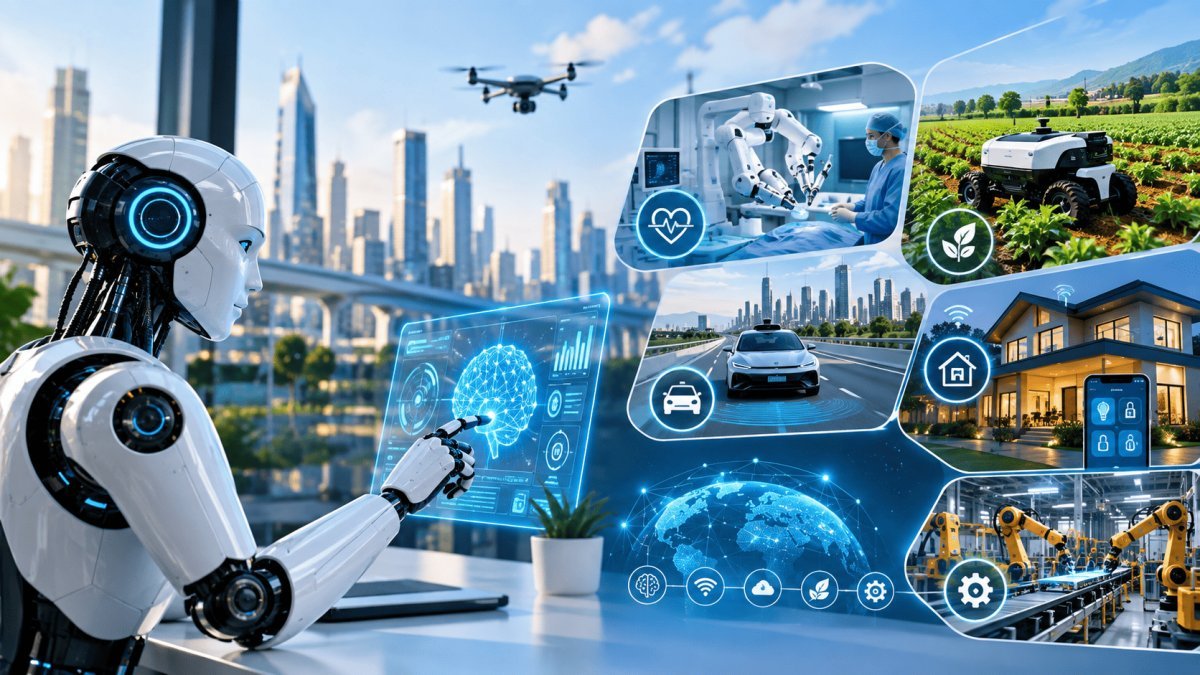
Technology is changing the way people live, work, communicate, and solve everyday problems. Among the most exciting developments in the modern world are robotics and future technology. From intelligent robots and automated factories to self-driving vehicles and smart homes, technological innovation is opening new possibilities for individuals and businesses.
Robotics and future technology are no longer ideas limited to science fiction movies. Today, robots are being used in hospitals, manufacturing, agriculture, education, and many other industries. At the same time, advancements in artificial intelligence, machine learning, and automation are helping machines perform increasingly complex tasks.
In this article, we will explore what robotics and future technology mean, how they are being used today, their potential benefits, and how they may shape our future.
What Is Robotics and Future Technology?
Robotics is a branch of technology that focuses on designing, building, programming, and operating robots. Robots are machines that can perform tasks with varying levels of automation. Some robots follow predefined instructions, while others use sensors and artificial intelligence to respond to their surroundings.
Future technology refers to emerging innovations that could significantly change how people interact with machines, industries, and the world around them. These innovations include advanced robotics, artificial intelligence, smart devices, renewable energy systems, biotechnology, and autonomous machines.
When robotics and future technology come together, they create opportunities to improve productivity, support human activities, and address complex challenges. Although some technologies are already in use, others are still being researched and developed.
The Importance of Robotics in Modern Technology
Robotics has become an important part of technological development. Businesses and organizations use robots to perform repetitive, dangerous, or highly precise tasks. In some environments, robots can work for long periods and maintain consistent performance.
For example, industrial robots are commonly used in manufacturing to assemble products, move materials, and perform welding tasks. In healthcare, robotic systems can assist medical professionals with certain procedures and support rehabilitation.
Robotics can also help improve workplace safety by reducing the need for people to work in hazardous environments. However, robots require careful design, maintenance, supervision, and appropriate safety measures.
As technology advances, robots are becoming more capable of sensing their surroundings, processing information, and interacting with people.
How Artificial Intelligence Is Improving Robotics
Artificial intelligence (AI) is one of the most important technologies influencing the future of robotics. Traditional robots often perform specific tasks according to programmed instructions. AI-powered robots can use data and computational models to recognize patterns, interpret information, and support decision-making.
Machine learning, computer vision, and natural language processing are some of the technologies that can be integrated into robotic systems.
1. Computer Vision
Computer vision allows robots to process visual information using cameras and software. This technology can help robots identify objects, recognize obstacles, and understand aspects of their environment.
For example, a warehouse robot may use cameras and sensors to navigate a facility and locate items.
2. Machine Learning
Machine learning enables systems to identify patterns in data and improve performance for particular tasks. In robotics, it can support navigation, object recognition, and movement planning.
The effectiveness of machine learning depends on the quality of data, the design of the system, and the environment in which the robot operates.
3. Natural Language Processing
Natural language processing helps computers process and respond to human language. When combined with robotics, it can make interactions with machines more intuitive.
In the future, people may increasingly use voice commands and conversational interfaces to interact with service robots and smart devices.
Types of Robots Shaping the Future
Robots come in different forms, and each type is designed for specific purposes. Some operate in factories, while others work in homes, hospitals, or outdoor environments.
Industrial Robots
Industrial robots are widely used in manufacturing and production. They can perform tasks such as assembly, welding, painting, packaging, and material handling.
These robots help manufacturers automate processes and maintain consistent precision. Human workers are still needed for programming, supervision, maintenance, engineering, and other responsibilities.
Humanoid Robots
Humanoid robots are designed with a human-like body structure or movement capabilities. Many research projects focus on developing robots that can operate in environments built for people.
Potential applications include logistics, assistance with routine tasks, research, and educational demonstrations. However, humanoid robots still face challenges related to balance, energy consumption, safety, cost, and reliable operation.
Medical Robots
Medical robotics includes robotic systems used to support healthcare professionals. Some systems assist with surgical procedures, rehabilitation, diagnostics, or the transportation of supplies.
Robotic-assisted surgery, for example, may provide specialized instruments and enhanced control for appropriately trained medical teams. Robots do not eliminate the need for clinical expertise, and their use depends on the specific procedure and healthcare setting.
Agricultural Robots
Agricultural robotics is being developed to support farming and food production. Robots can be used for tasks such as monitoring crops, removing weeds, harvesting selected crops, and collecting environmental information.
These technologies may help farmers manage labor-intensive activities and use resources more efficiently. Their practicality depends on crop type, terrain, weather, costs, and local farming conditions.
Service Robots
Service robots are designed to assist people in non-industrial settings. Examples include cleaning robots, delivery robots, and machines used in hospitality or public facilities.
As sensor technology and automation improve, service robots may become more common in specific environments where their capabilities and operating costs make sense.
Future Technology Trends to Watch
The future of technology involves more than robots alone. Several emerging fields are developing alongside robotics and could influence how machines operate and how people use them.
1. Smart Homes
Smart home technology connects devices such as lights, thermostats, security cameras, and appliances. These devices can often be controlled through mobile applications, voice interfaces, or automated routines.
In the future, smart homes may become more integrated, allowing different systems to coordinate household tasks. Privacy, cybersecurity, compatibility, and affordability will remain important considerations.
2. Autonomous Vehicles
Autonomous vehicle technology aims to enable vehicles to perform some or all driving tasks with limited or no human control, depending on the system's capabilities.
Self-driving technology relies on sensors, software, mapping, and decision-making systems. Although development is progressing, fully autonomous operation in complex real-world environments remains challenging.
Autonomous systems may eventually support transportation, logistics, and mobility services in selected locations.
3. Renewable Energy Technology
Renewable energy technology includes solar power, wind energy, energy storage, and other systems designed to generate or manage energy from renewable sources.
Robotics can support the inspection and maintenance of renewable energy infrastructure. Advances in batteries, automation, and energy management may also contribute to more efficient energy systems.
4. Internet of Things (IoT)
The Internet of Things refers to connected physical devices that collect, exchange, or process data. These devices can include industrial sensors, smart appliances, environmental monitors, and connected equipment.
Combining IoT with robotics allows machines to receive information from connected systems and support automated operations. Security and reliable connectivity are essential for these applications.
5. Advanced Materials and 3D Printing
3D printing, also known as additive manufacturing, creates objects layer by layer using digital designs. It is used in prototyping, manufacturing, research, and other applications.
Advances in materials and manufacturing methods could make it easier to develop specialized robotic components, customized tools, and lightweight structures.
How Robotics Can Change Different Industries
Robotics and future technology have the potential to influence many areas of the economy and society.
Healthcare
Robotic technologies may assist with rehabilitation, hospital logistics, and selected medical procedures. These systems can support healthcare professionals and improve access to certain services when properly implemented.
Education
Robotics can help students learn programming, engineering, mathematics, and problem-solving. Educational robots provide practical opportunities for learners to experiment with technology and understand how automated systems work.
Manufacturing
Automation can support production processes by performing repetitive operations and helping manufacturers maintain consistent quality. The adoption of robotics may also create demand for technicians, engineers, and specialists in automation.
Agriculture
Robotic monitoring and automated equipment may support farming operations by collecting data, performing selected tasks, and improving the management of agricultural resources.
Transportation
Automation and intelligent transportation systems could influence logistics, traffic management, and delivery services. Their benefits depend on infrastructure, regulations, reliability, and public acceptance.
Benefits of Robotics and Future Technology
The development of robotics and emerging technologies offers several potential advantages.
Increased Productivity
Robots can perform repetitive tasks efficiently in suitable environments. Automation may allow businesses to improve production processes and focus human effort on tasks requiring judgment, creativity, and specialized skills.
Improved Workplace Safety
Robots can be designed to operate in dangerous environments, such as areas with extreme temperatures or exposure to hazardous materials. Proper risk assessment and safety controls are still necessary.
Greater Precision
Some robotic systems can perform highly repetitive movements with consistent accuracy. This makes them useful in manufacturing, research, and other precision-focused applications.
Support for Healthcare and Accessibility
Assistive and rehabilitation technologies may help people with specific needs. Robotics research continues to explore ways to support mobility, independence, and healthcare services.
Innovation and Economic Development
New technologies can create opportunities for businesses, researchers, and workers. They may also increase demand for education and training in fields such as engineering, software development, and robotics maintenance.
Challenges and Risks of Future Robotics
Despite the potential benefits, robotics and future technology also present important challenges.
High Development and Maintenance Costs
Advanced robotic systems can be expensive to design, purchase, install, and maintain. Businesses need to evaluate whether the technology is suitable for their particular operations.
Job Displacement and Workforce Changes
Automation can change the tasks performed by workers and may reduce demand for certain roles in some industries. At the same time, new roles can emerge in programming, maintenance, engineering, and technology management.
Education, retraining, and thoughtful workplace planning can help people adapt to changing labor demands.
Privacy and Cybersecurity
Connected robots and smart devices may collect sensitive information or communicate over networks. Weak security can expose systems to unauthorized access or misuse.
Manufacturers and users should consider secure software, access controls, updates, and responsible data management.
Safety and Reliability
Robots operating around people must be designed and tested for their intended environments. Software errors, sensor limitations, mechanical failures, and unexpected conditions can create safety risks.
Human oversight, safety standards, and regular maintenance are important for responsible deployment.
Ethical Considerations
As machines become more capable, society must consider questions about accountability, transparency, data use, and the appropriate role of automation.
Responsible innovation requires attention to both technological performance and its effects on people.
The Future of Humanoid Robots
Humanoid robots are attracting significant attention because they are designed to operate in spaces created for humans. Their human-like form may allow them to interact with certain tools and environments without requiring extensive structural changes.
Researchers and companies are exploring potential uses in logistics, manufacturing, research, and assistance with routine tasks.
However, developing a robot that can safely and reliably perform a wide range of activities remains difficult. Challenges include dexterity, balance, battery life, perception, decision-making, and the cost of deployment.
The future of humanoid robots will depend on practical performance, safety, affordability, and whether they offer meaningful value in specific use cases.
Robotics and Future Technology in Everyday Life
Robotics may become more visible in everyday life as automated systems become more accessible. People already interact with robotic vacuum cleaners, automated customer service systems, smart appliances, and other connected technologies.
Future developments may include more coordinated home automation, improved assistive devices, and robots designed for specialized tasks.
However, the adoption of these technologies will vary depending on household needs, income, infrastructure, trust, and regional availability. Not every emerging technology will become widely used, and some applications may remain limited to specific industries.
How Students Can Learn About Robotics
Robotics is an interdisciplinary field that combines several areas of knowledge. Students and beginners can start learning through accessible projects and gradually develop more advanced skills.
Learn Programming
Programming languages such as Python and C++ are used in different areas of robotics and automation. Beginners can start with basic programming concepts, including variables, conditions, loops, and functions.
Study Electronics
Understanding basic electronics helps learners explore sensors, motors, circuits, and microcontrollers. Simple projects can provide hands-on experience.
Explore Robotics Kits
Educational robotics kits allow students to build and program small robots. These projects can help develop problem-solving, mechanical design, and programming skills.
Practice with Simulations
Robotics simulators can provide environments for learning navigation, movement, and control without requiring physical hardware for every experiment.
Follow Technology Developments
Reading reliable technology publications, research summaries, and educational resources can help learners understand new developments and their practical limitations.
What Does the Future Hold for Robotics?
The future of robotics is likely to involve a combination of automation, artificial intelligence, improved sensors, and more advanced software. Robots may become better at performing specific tasks in factories, hospitals, warehouses, laboratories, and other environments.
However, technological progress is not always predictable. Some proposed applications may take years to develop, while others may face technical, financial, or regulatory limitations.
Rather than replacing every human activity, robotics is likely to develop through a range of applications where machines can provide practical assistance. Human expertise, creativity, communication, and accountability will continue to play important roles in many areas.
The most useful innovations will be those that solve real problems while considering safety, accessibility, and responsible design.
Conclusion
Robotics and future technology are transforming the way people think about automation, innovation, and the possibilities of modern machines. From industrial robots and medical systems to artificial intelligence and smart homes, these technologies are being developed for a wide range of applications.
Although robotics offers potential benefits such as increased productivity, improved precision, and workplace safety, it also introduces challenges involving costs, cybersecurity, employment, and ethics.
Understanding these developments can help individuals and businesses prepare for technological changes. As research continues, robotics and future technology will remain important areas of innovation, learning, and discussion.
The future of robotics is not simply about creating smarter machines. It is also about developing technology that serves people responsibly and solves meaningful problems.

Comments
Comments (0)
Security Check
Please complete the captcha to verify you are human.