
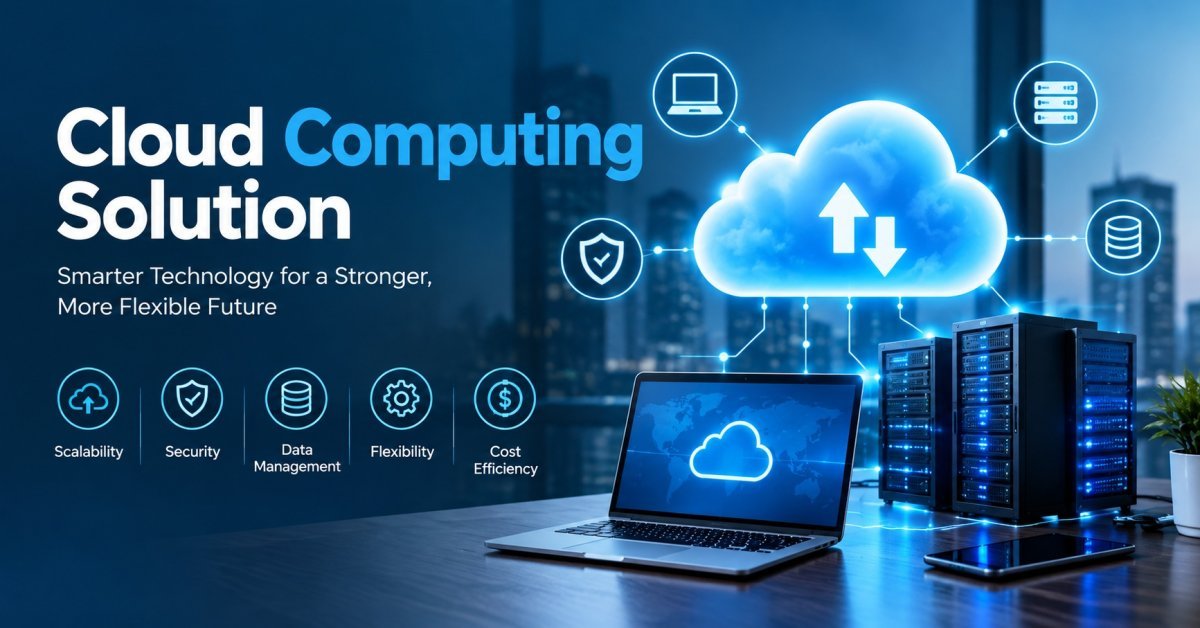
Businesses today need technology that is flexible, secure, and easy to scale. This is where a cloud computing solution can make a real difference. Instead of relying only on physical servers and expensive hardware, businesses can use cloud-based services to store data, run applications, manage workloads, and access important resources over the internet.
Whether you run a small business or a growing enterprise, cloud computing can help reduce infrastructure costs while improving flexibility and productivity.
What Is a Cloud Computing Solution?
A cloud computing solution is a technology service that allows businesses and individuals to access computing resources through the internet. These resources can include servers, storage, databases, networking, software, and processing power.
Rather than purchasing and maintaining all the required hardware, a business can use cloud services based on its needs. This makes it easier to increase or decrease resources as the business grows.
For example, an online store may need additional computing resources during a busy shopping season. With cloud technology, those resources can be increased when needed and reduced afterward.
Why Do Businesses Need Cloud Computing?
Traditional IT infrastructure can require significant investment in hardware, maintenance, software, and technical support. A cloud computing solution provides a more flexible approach.
Some common reasons businesses move to the cloud include:
- Lower infrastructure costs
- Easy access to data and applications
- Flexible storage and computing resources
- Better collaboration between teams
- Improved scalability
- Easier backup and disaster recovery
- Support for remote and hybrid work
Cloud technology can therefore become an important part of a company's long-term digital strategy.
Cloud Computing Solution for Business
A cloud computing solution for business can be designed according to the specific needs of an organization. A small company may only need cloud storage and business applications, while a larger organization may require complete cloud infrastructure.
Common business uses include:
Data Storage
Cloud storage allows businesses to keep important files and information online. Employees can access authorized files from different locations without depending on a single physical computer.
Business Applications
Companies can host applications in the cloud instead of running everything on local machines. This can make applications easier to manage and access.
Data Backup
Cloud-based backup can help protect important business information from hardware failures, accidental deletion, or other unexpected problems.
Remote Collaboration
Teams working from different locations can use cloud-based tools to communicate, share files, and work on projects together.
What Does a Cloud Computing Solutions Architect Do?
A cloud computing solutions architect is responsible for designing cloud environments that meet a company's technical and business requirements.
Their work may include selecting cloud services, planning infrastructure, designing security controls, and creating a scalable cloud architecture.
A solutions architect also considers factors such as:
- Business requirements
- Security
- Performance
- Scalability
- Cost
- Data management
- Application requirements
Good cloud architecture is not simply about moving everything to the cloud. It involves choosing the right services and creating an environment that supports the organization's goals.
Cloud Computing Solutions Group
A cloud computing solutions group typically brings together professionals who work on cloud infrastructure, applications, security, migration, and support.
Having a dedicated group can help organizations manage different parts of their cloud environment. For example, one team may focus on cloud security while another handles application deployment and infrastructure management.
The exact services offered by a cloud computing solutions group can vary depending on the organization and its customers.
Benefits of Using Cloud Technology
A well-planned cloud computing solution can provide several practical benefits.
Scalability
Cloud resources can be adjusted according to changing business requirements. This is particularly useful for companies experiencing rapid growth.
Cost Management
Businesses can avoid some of the upfront costs associated with purchasing large amounts of physical infrastructure. Cloud pricing models can also allow organizations to pay for resources according to usage, depending on the service.
Accessibility
Cloud services can make applications and data accessible from different locations, provided users have the appropriate permissions and an internet connection.
Security
Cloud providers offer various security features, but businesses still need to configure services correctly and follow good security practices.
Business Continuity
Cloud-based backup and recovery solutions can help organizations prepare for unexpected disruptions.
How to Choose the Right Cloud Computing Solution
Choosing the right solution requires more than comparing prices. Businesses should first understand their technical requirements and future goals.
Consider the following factors:
1. Business requirements: Identify what you actually need from the cloud.
2. Security: Check available security controls, access management, encryption, and compliance options.
3. Scalability: Make sure the solution can grow as your business grows.
4. Performance: Consider application speed, availability, and network requirements.
5. Cost: Compare the total expected cost rather than looking only at the initial price.
6. Support: Reliable technical support can be important when managing business-critical cloud services.
Cloud Computing Solutions Group Inc and Cloud Services
When researching providers, you may come across organizations such as cloud computing solutions group inc. Businesses should carefully review each provider's services, experience, security practices, pricing, and customer support before choosing a cloud partner.
The right provider should understand your business requirements and help create a cloud environment that is practical, secure, and scalable.
Is Cloud Computing Right for Every Business?
Cloud computing can be useful for many organizations, but the right approach depends on the company's needs. Some businesses may benefit from a fully cloud-based infrastructure, while others may prefer a hybrid approach that combines cloud services with on-premises systems.
The important thing is to choose an architecture based on actual business requirements rather than simply following a technology trend.
Final Thoughts
A cloud computing solution can help businesses modernize their IT infrastructure, improve flexibility, support remote work, and scale resources as requirements change. From cloud storage and applications to advanced infrastructure and data management, cloud services can support many different business needs.
Working with an experienced cloud computing solutions architect or cloud computing solutions group can also help businesses plan their cloud strategy more effectively. Before selecting a provider, evaluate security, scalability, performance, cost, and support to find a solution that fits your organization's goals.
For businesses looking for a cloud computing solution for business, the best starting point is to understand your current infrastructure, identify your challenges, and then build a cloud strategy around your specific needs.



Comments
Comments (0)
Security Check
Please complete the captcha to verify you are human.