
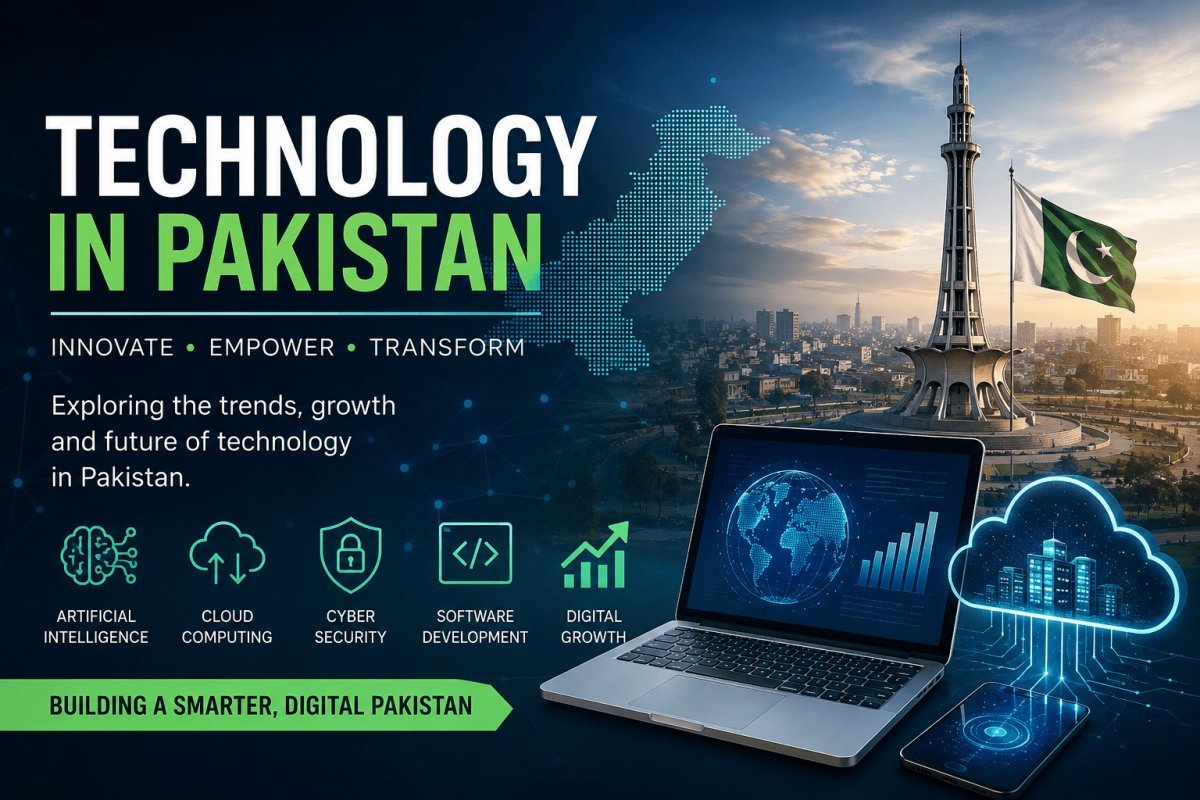
Technology in Pakistan is rapidly changing the way people work, communicate, study, run businesses and access services. From artificial intelligence and cloud computing to cybersecurity, software development and digital platforms, technology has become an important part of Pakistan’s economic and social development.
Pakistan’s technology sector is also gaining international attention because of its growing IT workforce, expanding digital economy and increasing demand for technology-based services. Recent developments show that artificial intelligence, cybersecurity, cloud infrastructure and digital transformation are becoming important priorities for the country.
The Growth of Technology in Pakistan
The technology industry in Pakistan has moved far beyond traditional computer and software services. Today, technology is influencing almost every major sector, including education, healthcare, banking, agriculture, e-commerce, transportation and government services.
Businesses are increasingly using digital tools to communicate with customers, manage operations and reach international markets. At the same time, students and young professionals are developing skills in programming, artificial intelligence, cybersecurity, cloud computing, digital marketing and freelancing.
Pakistan’s ICT export remittances reached approximately US$3.38 billion during July–March FY2026, according to a recent report, while technology freelance exports also recorded strong growth. These developments demonstrate the increasing importance of technology-related services to Pakistan’s economy.
Artificial Intelligence in Pakistan
Artificial Intelligence (AI) is one of the most important technology trends shaping Pakistan’s digital future.
AI can help businesses automate repetitive tasks, analyze information, improve customer service and make faster decisions. Educational institutions and technology companies are also exploring AI-powered tools for learning, research and productivity.
Pakistan is also working toward strengthening its national AI capabilities. Government and industry discussions increasingly focus on AI infrastructure, skilled professionals, research and responsible AI adoption.
For Pakistani students and professionals, AI represents an important opportunity. Skills such as machine learning, data analysis, AI development, prompt engineering and AI system management are likely to remain valuable as organizations adopt more intelligent digital solutions.
Cloud Computing and Digital Infrastructure
Cloud computing is another major area of technology growth in Pakistan.
Instead of relying entirely on physical servers, organizations can use cloud infrastructure to store data, operate applications and scale their digital services. Cloud technology can help businesses improve flexibility, accessibility and operational efficiency.
Pakistan’s digital transformation is also creating greater interest in secure and locally controlled digital infrastructure. In 2026, the Pakistan Digital Authority announced a partnership focused on sovereign cloud infrastructure and AI-native software systems, highlighting the growing importance of data control and digital infrastructure.
For businesses, cloud computing can support everything from websites and online stores to enterprise applications and AI workloads.
Cybersecurity Is Becoming Essential
As more people and businesses move online, cybersecurity has become a critical part of technology in Pakistan.
Cyber threats can affect individuals, businesses, financial institutions and government organizations. Phishing, malware, ransomware, account theft and data breaches can cause financial losses and damage public trust.
This makes cybersecurity education and professional skills increasingly important. Businesses need secure networks, strong authentication, regular software updates, data protection and employee awareness.
The growing use of AI is also changing cybersecurity. AI can help security teams identify suspicious activity and respond faster, but attackers can also use advanced technology to create more sophisticated threats. This means cybersecurity will remain a major technology priority in the coming years.
Software Development and IT Careers
Software development remains one of the foundations of Pakistan’s technology industry.
Pakistani developers work on websites, mobile applications, enterprise software, e-commerce platforms, cloud applications and customized digital solutions for both local and international clients.
Popular areas of development include:
- Web development
- Mobile app development
- Software engineering
- Artificial intelligence
- Machine learning
- Cloud engineering
- Data analytics
- Cybersecurity
- DevOps
- UI/UX design
The growth of remote work and freelancing has also created opportunities for Pakistani professionals to work with international companies and clients.
Technology and Freelancing in Pakistan
Freelancing has become an important part of Pakistan’s digital economy. Professionals can offer services to international clients without physically relocating to another country.
Technology skills such as programming, graphic design, video editing, SEO, digital marketing, web development and AI services are increasingly useful for freelancers.
The growth of technology exports and freelance services demonstrates how digital skills can create economic opportunities for individuals as well as businesses.
However, long-term success in freelancing requires more than simply learning a technical skill. Communication, professional portfolio development, project management and understanding international client requirements are equally important.
E-Commerce and Digital Business
Technology is also transforming the way Pakistanis buy and sell products.
E-commerce platforms, digital payments, social media marketing and online marketplaces allow businesses to reach customers beyond their local areas. Small businesses can establish an online presence without requiring a large physical infrastructure.
Social media has also become an important marketing channel. Businesses can use platforms such as Facebook, Instagram, TikTok and other digital channels to promote products, communicate with customers and build their brands.
As internet access and digital payment systems continue to develop, Pakistan’s online business ecosystem has significant potential for further growth.
Technology in Education
Technology is changing education by making learning resources more accessible.
Students can use online courses, educational platforms, digital libraries, video lessons and AI-powered learning tools to develop new skills. Technology also allows teachers and educational institutions to provide learning materials through digital platforms.
For Pakistan, technology-based education can be particularly valuable because students can access international learning resources while remaining in their local communities.
The future workforce will increasingly need both traditional education and digital skills.
The Future of Technology in Pakistan
The future of technology in Pakistan will likely be shaped by several key areas:
1. Artificial Intelligence
AI adoption is expected to expand across businesses, education, healthcare, finance and government services.
2. Cybersecurity
As digital dependence increases, organizations will need stronger systems to protect information and digital identities.
3. Cloud Computing
Cloud infrastructure will continue supporting scalable applications, online businesses and AI-powered services.
4. Digital Payments
Digital financial services can make transactions faster and more convenient while supporting the growth of online businesses.
5. Software and IT Exports
Pakistan has an opportunity to increase the value of its technology exports by developing advanced software, AI solutions and specialized technology services.
6. Technology Education
Training more students and professionals in advanced technology fields will be essential for maintaining long-term growth.
Challenges Facing Technology in Pakistan
Despite its potential, Pakistan’s technology sector also faces challenges.
These include gaps in advanced technical skills, infrastructure limitations, cybersecurity risks, access to investment and the need for stronger research and development.
The country will need continued investment in digital infrastructure, education, innovation and technology businesses to compete effectively in the global digital economy.
Experts have also emphasized the importance of moving toward higher-value areas such as AI, advanced software engineering, cybersecurity and other specialized technologies instead of relying primarily on lower-value digital services.
Conclusion
Technology in Pakistan is entering an important phase of growth. Artificial intelligence, cloud computing, cybersecurity, software development, freelancing and digital business are creating new opportunities for students, professionals, entrepreneurs and established organizations.
The next stage of Pakistan’s digital development will depend on skilled people, reliable infrastructure, responsible technology adoption and innovation.
For young Pakistanis especially, learning modern technology skills can open doors to local employment, entrepreneurship and international opportunities.
As Pakistan continues its digital transformation, technology will not simply be a tool for the future—it will be one of the key drivers of the country’s economic and social progress.
Comments
Comments (0)
Security Check
Please complete the captcha to verify you are human.